

Project Summary
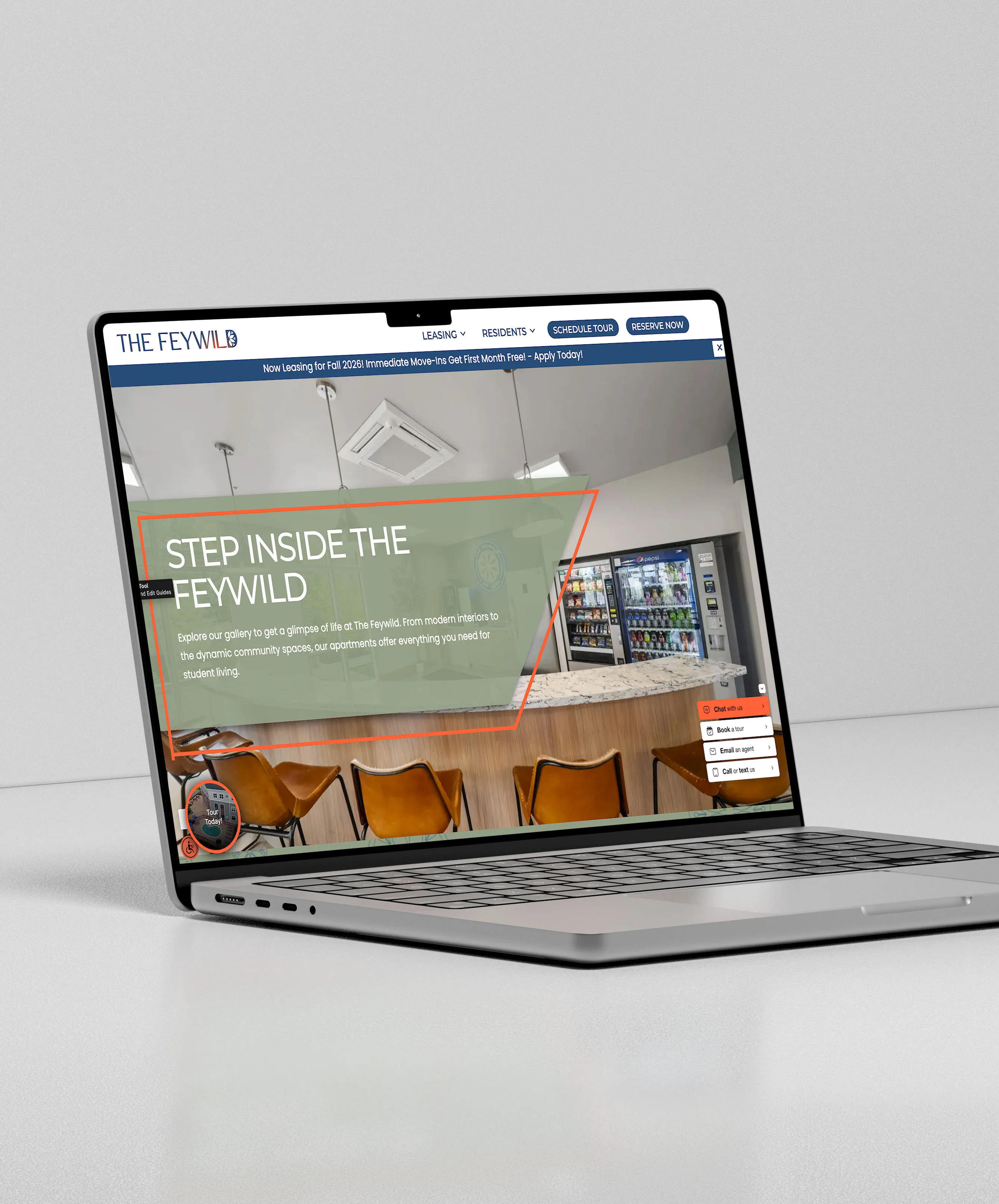
The Feywild’s website plays a critical role in attracting, informing, and converting prospective residents in an increasingly competitive student-housing market. To ensure the site is performing at its highest potential, this proposal outlines a comprehensive Technical SEO and Design/UI Audit designed to evaluate how the website functions, how it appears in search results, and how users experience it across devices. The goal of this engagement is to identify opportunities to improve site performance, search visibility, usability, and conversion effectiveness, and to provide a clear, actionable roadmap for ongoing optimization and growth.
Expected outcomes
- Improved search visibility for keywords like “RIT student apartments”, “Rochester off‑campus housing”, and “pet‑friendly student apartments near RIT”.
- Higher organic traffic from students and parents researching housing options, leading to more tour requests and lease applications.
- Enhanced user experience with faster load times, relevant content and better navigation, which supports Google’s emphasis on page‑experience signalsdevelopers.google.com.
- Stronger local presence through an optimised Google Business Profile, consistent citations and more positive reviews.
Scope and Plan for Technical SEO Audit
Phase 1: Discovery and Assessment (Weeks 1–2)
- Review the current site architecture, crawlability and indexation via a full site crawl.
- Identify untapped keywords
- Analyze robots.txt and XML sitemaps; identify issues like misconfigured sitemap references.
- Evaluate page speed and Core Web Vitals metrics using tools such as Google PageSpeed Insights and Search Console.
- Audit on‑page elements: titles, meta descriptions, headings, internal linking, image alt text and duplicate content.
- Review current analytics and tracking setup (Google Analytics, Tag Manager, Search Console) for accuracy.
- Conduct competitor research to benchmark keyword performance, content breadth and backlink profiles.
Deliverables: A comprehensive technical audit report summarising issues, quick wins and longer‑term improvements; prioritised action list; competitor comparison brief.
Phase 2: Implementation (Weeks 3–6)
- Fix robots and sitemap configuration, ensuring correct URLs and canonical tags.
- Optimize images (compression and responsive sizing), implement caching and remove unnecessary scripts.
- Adjust titles, descriptions and heading structure; rewrite alt text to reflect actual images.
- Set up or refine analytics tools and create dashboards for ongoing monitoring.
- Address mobile‑friendliness issues identified in the audit.
Deliverables: Implemented technical fixes, updated on‑page elements, optimised image assets and a revised analytics configuration with defined goals.
Phase 3: Ongoing Monitoring and Improvement (Month 3 onwards)
- Perform monthly site crawls to detect new errors or issues.
- Track Core Web Vitals and adjust technical settings as needed.
- Generate monthly SEO performance reports (traffic, rankings, conversions).
- Make iterative improvements based on data and evolving best practices.
Deliverables: Monthly technical health reports, updated roadmaps for continuous improvement.
Scope and Plan for Design and UI Audit
Phase 1: User Experience Assessment (Weeks 1–2, concurrent with technical discovery)
- Evaluate the website’s overall aesthetic, brand consistency and visual hierarchy.
- Assess navigation clarity, menu structure and ease of finding critical information.
- Analyze readability: fonts, contrast, spacing and content layout.
- Review form design, call‑to‑action placements and microinteractions.
- Conduct a basic accessibility check (color contrast, alt text, keyboard navigation).
- Examine mobile responsiveness and identify elements that do not scale or function well on smaller screens.
Deliverables: A UI/UX audit report with annotated screenshots highlighting design issues, accessibility gaps and user‑flow bottlenecks; a set of prioritised recommendations.
Phase 2: Design Refinement and Prototyping (Weeks 3–6)
- Collaborate with stakeholders to refine brand colors, typography and image guidelines.
- Create wireframes or mockups showing improved layouts for key pages (home, floor plans, amenities, contact).
- Define consistent button styles, form components and navigation structures.
- Prototype responsive versions to ensure consistent experiences across desktop and mobile.
- Validate new designs with user feedback (e.g., quick user testing or stakeholder reviews).
Deliverables: High‑fidelity mockups or prototypes, style guide updates and documented design standards to guide implementation.
Phase 3: Implementation and QA (Weeks 7–10)
- Work with developers to implement the approved design updates.
- Update imagery with property‑specific photos and adjust alt text accordingly.
- Improve forms by reducing field complexity, adding inline validation and clearly labelling buttons.
- Test across multiple browsers and devices to ensure responsive performance and accessibility compliance.
- Conduct a final QA to verify that design changes support site goals (e.g., more visible calls to action, improved readability).
Deliverables: Live site reflecting design enhancements, updated content assets and an end‑of‑project UI/UX report summarising outcomes and next steps.
Deliverables: Quarterly UX review summaries, design enhancements and user‑feedback reports.
By integrating these two parallel tracks—technical SEO and design/UI—you’ll address both the underlying performance and searchability issues as well as the visual and experiential facets that influence user engagement. This coordinated approach ensures that technical improvements work hand‑in‑hand with a more compelling, user‑friendly design to attract and convert prospective residents.
Investment
Total Retainer: $1,000/month (3-month minimum commitment)
Total Project Cost: $3,000
Includes:
- All deliverables listed above
- Monthly reports + ongoing consultation
- Implementation and optimization support
Reporting & Communication
You’ll receive:
- Monthly performance report with keyword rankings and traffic data
- One 30-minute strategy call per month
- Email updates for key milestones or deliverable reviews
Next Steps
- Approve this proposal.
- Sign the 3-month SEO agreement.
- First invoice ($1,000) due to begin project.
- Kickoff meeting to review goals, target audience, and access to tools.